
How to Build a Lightning Protection and Earthing BOM for a Solar Substation?
Sep. 24, 2026
For a solar farm or substation, a lightning-protection and earthing BOM should be built from the electrical layout, equipment list, grounding design, and site conditions rather than from a generic list of copper rods and clamps. A practical procurement package should identify the protected equipment, conductor routes, connection points, material specifications, corrosion environment, and required testing documents before suppliers quote quantities.
What Should Be Included in a Solar Earthing BOM?
A typical project BOM may include several categories:
Earthing conductors
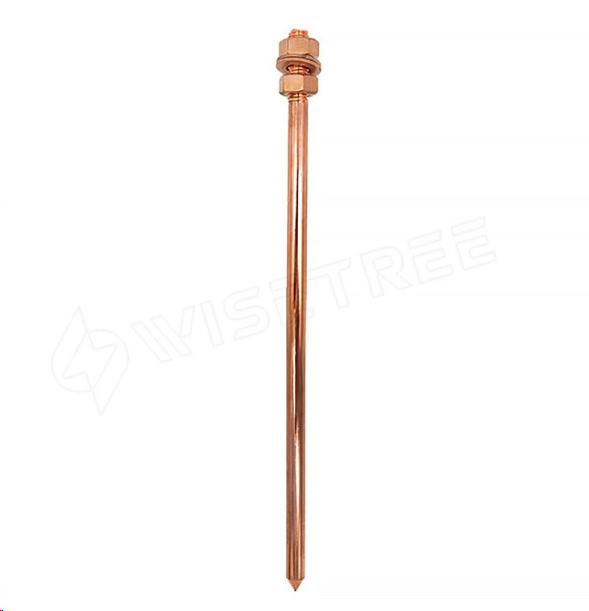
Earth rods or electrodes
Grounding connectors
Equipotential bonding components
Lightning protection conductors
Air terminals where required by the design
Mechanical connectors
Test/disconnection points
Connection hardware
Corrosion-protection materials
The exact BOM depends on the electrical and lightning-protection design.
WISETREE identifies Lightning Protection & Earthing Systems as one of its major product categories and also provides cable connection products that can be integrated into broader power-system projects. Its current project portfolio includes a German solar farm project involving cable connections and earthing systems for a 50 MW photovoltaic farm.
The 50 MW figure describes that published project; it should not be treated as a universal design size for solar farms.
Why Should Earthing and Lightning Protection Be Purchased as One Project Package?
These systems interact at multiple connection points.
A solar farm may contain:
PV module frames
Mounting structures
Combiner boxes
Inverters
Transformers
Medium-voltage switchgear
Control systems
Communication equipment
Substation structures
Cable trays
Fences and auxiliary equipment
If each component is purchased separately without a coordinated grounding design, connection compatibility can become difficult to manage.
For procurement, the better approach is to divide the BOM into system functions rather than simply product names.
| System function | Typical procurement category |
| Equipment bonding | Grounding conductors and connectors |
| Structure bonding | Grounding clamps/connectors |
| Earth electrode connection | Earth clamps/connectors |
| Lightning-current path | Lightning protection conductors and connection hardware |
| Cable termination | Cable lugs/connectors |
| Inspection | Test points and documentation |
| Corrosion protection | Compatible protective materials |
The exact products must follow the project's approved grounding and lightning-protection design.
What Site Data Does a Supplier Need?
A supplier cannot determine the complete BOM accurately from installed MW alone.
Useful project information includes:
PV plant capacity
Site area
Soil characteristics
Ground resistivity data
Transformer quantity
Inverter quantity
MV voltage level
Substation configuration
Lightning-risk assessment
Grounding network layout
Conductor material
Required conductor cross-section
Local standards
Environmental conditions
Corrosion category
Expected service life
The site's soil and environmental conditions can affect electrode selection and connection materials.
For example, a coastal site with high chloride exposure may require a different corrosion-control approach from an inland dry site.
How Does Ground Resistivity Affect Procurement?
Ground resistivity is an important engineering input because it influences the design of the grounding electrode system.
However, buyers should avoid using a generic “standard earth resistance” number in an RFQ without engineering justification.
The grounding design should be based on measured or appropriately modeled site conditions and the applicable standard.
A procurement document can therefore specify:
Ground resistivity: measured/project value
Target grounding performance: project-engineered requirement
Grounding conductor: material + cross-section
Electrode: approved type and dimensions
Connection method: approved mechanical, compression, welded, or other specified method
This gives manufacturers a technical basis for recommending compatible components.
Should Copper or Aluminum Be Used for Earthing Connections?
Material selection depends on the location and function of the connection.
Copper is widely used for grounding conductors and bonding components because of its electrical and corrosion characteristics. Aluminum can also be used in electrical systems, but its use in grounding applications requires careful consideration of material compatibility and environmental exposure.
For example, direct copper-aluminum contact in a wet environment requires appropriate engineering controls.
WISETREE's product range includes copper, aluminum, and bimetallic connection products, allowing the connection material to be selected according to the conductor and interface requirements.
For procurement, the BOM should therefore identify both sides of the connection, not just “copper clamp” or “grounding connector.”
What Connection Points Need Special Attention?
The most failure-prone areas are often individual joints rather than the main conductor itself.
A project team should pay particular attention to:
PV Module and Mounting Structure Connections
The grounding/bonding method must be compatible with the module frame, mounting rail, coating, and project design.
A connection that damages a protective coating can introduce corrosion concerns, while a connection that does not establish reliable electrical continuity can compromise the intended bonding path.
Inverter and Combiner Equipment
The connection should match the equipment grounding terminal and conductor size.
The BOM should record terminal hole size, conductor cross-section, connection hardware, and enclosure/environmental requirements where applicable.
Transformer and Substation Connections
These points can involve larger conductors and higher fault-current requirements.
The selected connection components should therefore be verified against the project's electrical and mechanical requirements rather than selected only by physical appearance.
Cable Tray and Structural Bonding
Long cable routes and metal structures can create numerous bonding points.
The BOM should identify connection intervals and locations according to the approved engineering drawings instead of using a generic quantity per meter.
How Should Buyers Specify Grounding Connectors?
A useful RFQ should include actual measurable parameters.
| Parameter | Example procurement field |
| Conductor material | Copper |
| Conductor size | Project-specified mm² |
| Connection type | Cable-to-structure |
| Bolt/hole size | Project-specified |
| Material | Copper / tinned copper / approved alloy |
| Environment | Outdoor solar farm |
| Corrosion exposure | Project-specific |
| Standard | Project-specified |
| Testing | Required test documentation |
| Quantity | BOM quantity |
| Packaging | Site installation requirement |
This is more reliable than sending a product name without technical dimensions.
WISETREE's current cable-connection product information specifically recommends providing conductor material, cable size, connection position, dimensions, application, and project requirements when requesting product matching.
What Happens If Grounding Connections Are Underspecified?
An earthing system can fail at the connection level even when the main conductor and electrode design are correct.
Possible problems include:
Loose mechanical joints
Corrosion at dissimilar-metal interfaces
Incorrect conductor size
Poor contact between mating surfaces
Incorrect bolt-hole dimensions
Damaged protective coatings
Incompatible connection hardware
Difficult inspection access
Missing documentation
The consequence is not simply a procurement inconvenience. A poorly specified connection can make commissioning, maintenance, and future fault investigation more difficult.
For this reason, connection components should be included in the engineering review rather than treated as generic hardware.
How Should a 50 MW Solar Farm Be Approached?
WISETREE's published German project describes a 50 MW solar photovoltaic farm requiring cable connections and earthing systems for long-term performance and grid compliance.
For a project of this scale, the procurement team would normally need to break the system into equipment groups instead of asking for one universal grounding package.
A practical structure could be:
PV field: module/structure bonding components
DC collection: equipment grounding connections
Inverter stations: grounding and bonding components
MV system: cable connection and equipment bonding
Transformer area: grounding connections
Substation: main earthing and equipment bonding
Lightning protection: air terminals, down conductors, and earth-system interfaces according to the design
Monitoring: inspection/test points
The actual quantity should come from the approved engineering drawings and cable schedule.
How Should Procurement Teams Compare Two Earthing Suppliers?
Price should not be the only comparison point.
A technical comparison can include:
| Evaluation item | Supplier A | Supplier B |
| Material specification | Verify | Verify |
| Dimensions | Verify | Verify |
| Conductor range | Verify | Verify |
| Connection method | Verify | Verify |
| Applicable standards | Verify | Verify |
| Test documentation | Verify | Verify |
| Corrosion requirements | Verify | Verify |
| Drawing support | Verify | Verify |
| Sample availability | Verify | Verify |
| Customization | Verify | Verify |
| Packaging | Verify | Verify |
| Lead-time commitment | Verify | Verify |
WISETREE states that it performs quality inspection before shipment and supports project-specific product evaluation based on drawings and technical specifications. It also states that standard samples are available for evaluation.
These capabilities can be relevant when a solar or substation project requires more than standard catalogue components.
What Standards Should Buyers Put in the RFQ?
There is no single standard that should automatically be copied into every solar-farm RFQ.
The project specification should identify the applicable electrical, grounding, lightning-protection, equipment, and local regulatory requirements.
Depending on the project and jurisdiction, the engineering team may reference standards from IEC, IEEE, UL, NFPA, or local grid authorities.
The important procurement principle is:
Specify the required standard before quotation, then require the supplier to confirm the exact product model against it.
A supplier's general statement that a company has “CE” or “ISO” certification does not prove that every grounding component complies with the project's required product standard.
What Should Be Tested Before Commissioning?
Testing should follow the approved engineering and commissioning procedure.
Depending on the system, this can include:
Grounding-system measurements
Electrical continuity checks
Visual inspection
Mechanical-joint inspection
Torque verification where specified
Connection inspection
Lightning-protection continuity
Documentation review
The actual acceptance criteria should come from the project design and applicable standards.
The procurement contract can require the supplier to provide dimensional drawings, material information, inspection records, certificates, and installation instructions before shipment.
How Can WISETREE Support a Project BOM?
WISETREE provides grounding and lightning-protection products as part of its wider power-product portfolio. The company also supplies cable lugs, cable connectors, mechanical connection products, flexible copper braided wires, and copper busbar solutions.
For project-specific sourcing, WISETREE states that buyers can submit drawings or technical specifications for product review and that customization can cover dimensions, conductor size/range, mounting-hole configuration, connection structure, marking, and packaging.
For a solar farm, EPC, substation, or industrial grounding project, this allows the RFQ to be built around the engineering BOM rather than around generic product names.
FAQ: Solar Earthing and Lightning Protection Procurement
What information should I send when requesting a solar grounding quotation?
Provide the site location, project capacity, grounding design, conductor material and size, equipment list, connection types, environmental conditions, applicable standards, and required quantities. A BOM or engineering drawing is much more useful than the project MW rating alone.
Does a larger solar farm automatically require more grounding products?
Generally, a larger installation contains more equipment and connection points, but quantity cannot be calculated reliably from MW alone. The final BOM should be based on the actual site layout, equipment count, grounding design, and lightning-protection design.
Can copper and aluminum grounding components be mixed?
They can be used in some systems, but the connection between dissimilar metals needs to be specifically engineered for material compatibility and environmental exposure. The correct connector should be selected for the conductor and the equipment interface.
Should grounding connectors be customized for a solar project?
Customization can be useful where standard products do not match the required conductor size, mounting hole, dimensions, or equipment interface. WISETREE states that project-specific dimensions and configurations can be reviewed based on drawings or technical specifications.
What documents should I request from the supplier?
At minimum, request the product drawing, material information, applicable certificates or test reports, installation instructions, inspection requirements, and packaging details. For project-specific components, ask the supplier to identify the exact model against the approved BOM.
Can WISETREE supply more than grounding connectors?
Yes. WISETREE's product portfolio includes cable lugs and connectors, lightning protection and earthing systems, flexible copper braided wires, copper busbars, and electrical wiring accessories.
A Practical RFQ Structure for Solar Projects
Before sending the RFQ, prepare these fields:
Project capacity and location
Grounding design
Soil/ground-resistivity information
Equipment list
Conductor material and size
Connection-point drawings
Applicable standards
Environmental conditions
Required certificates/test reports
BOM quantity
Packaging requirements
Delivery schedule
For project-specific grounding and lightning-protection components, contact WISETREE at wisetree@wisetreepower.com and attach the BOM or technical drawings.
The more complete the engineering information, the less likely the procurement team is to receive a technically incompatible “standard” component simply because its product name appears to match the application.
More News
-

-

Oct. 20, 2026
-